A Tale of Two Lawsuits
For years, independent housing providers across Washington State have absorbed the financial consequences of aggressive rental legislation; lost rent, skyrocketing operating costs, and properties that once served vulnerable residents now struggling to survive. That era of quiet suffering is over. Two active lawsuits are making the case in Washington’s courts that what the local and state government have done to housing providers was not just bad policy - it was unconstitutional. GRE Downtowner v City of Seattle and Cedarland Homes v the State of Washington are both taking the legal battle to our local governments in order to prove when government regulations have gone too far. The cornerstone of both of these cases is inherently based on the same legal principle, known as the takings clause.
The Takings Clause: The Government Cannot Take What is Yours Without Paying for it
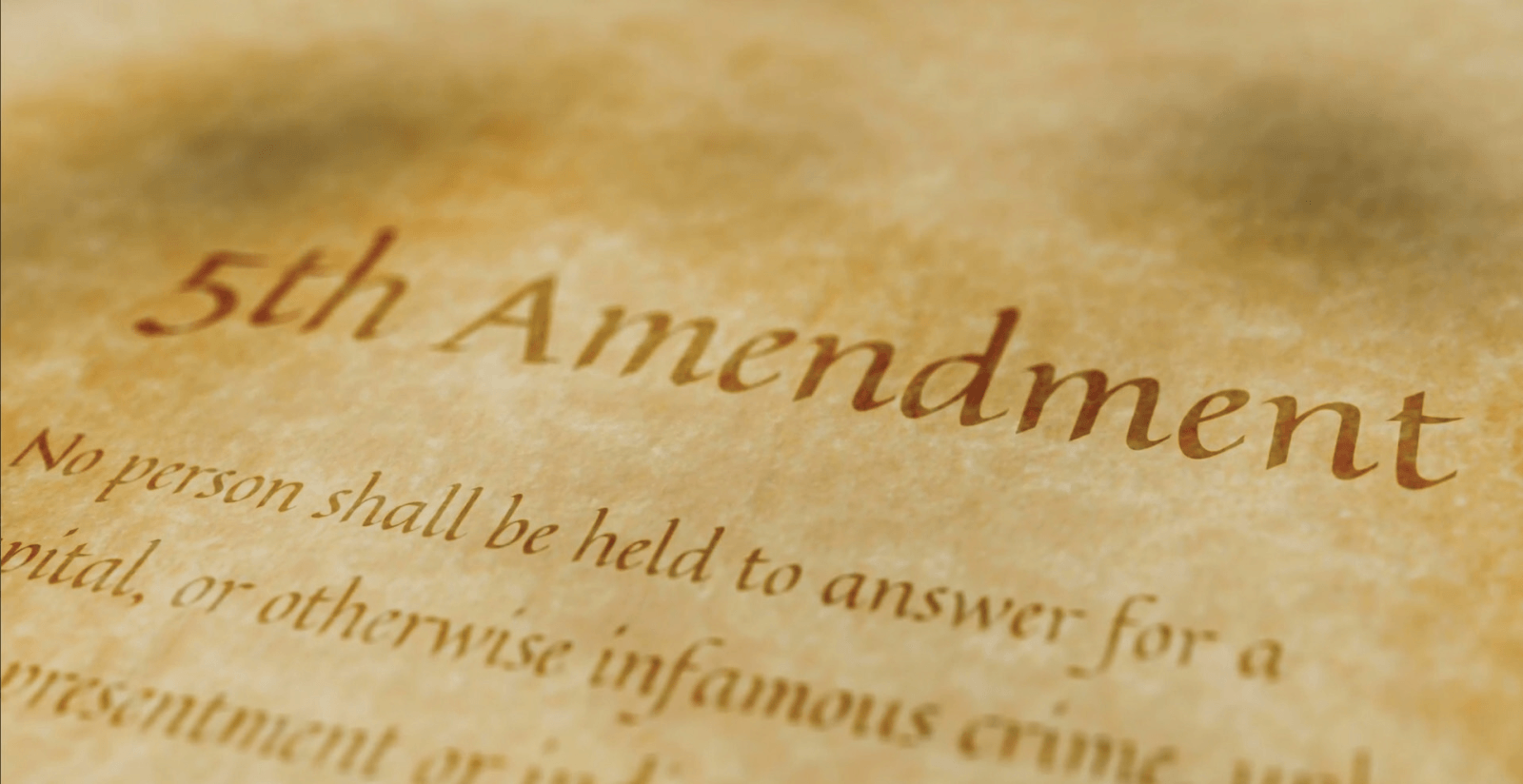
The Fifth Amendment of the United States Constitution (mirrored in Washington’s own State Constitution) is clear: private property shall not be taken for public use without just compensation. Typically people associate this with physical seizure, like eminent domain. But the courts have long recognized a second category, known as a regulatory taking, which occurs when government regulation so thoroughly strips an owner of the ability to use their property that it becomes functionally equivalent to a seizure even if the government never formally takes title. When the government forces you to continue housing tenants against your will, prohibits you from removing dangerous or non-paying occupants, all while leaving you fully responsible for the mortgage, the taxes, and the upkeep, that is no longer within the bounds of typical regulation. In these instances, the Constitution says there must be compensation.
GRE Downtowner v. City of Seattle: A Building Destroyed by a Thousand (or Six) Cuts
GRE Downtowner invested $26.5 million to renovate the Addison on Fourth in Seattle’s Chinatown-International District into 254 units of affordable housing. For several years, the building ran successfully as the public-private partnership it was designed to be. Then Seattle’s City Council passed six tenant protection ordinances between 2018 and 2022: the Fair Chance Housing Ordinance, the Roommate Ordinance, the Winter Eviction Ban, the COVID-19 Eviction Moratorium, and rent increase mandates and relocation assistance mandates. The cumulative effect was devastating. Security costs quintupled. Vacancy climbed to nearly 45%. Rent collections fell from 93% to below 45%. The Addison lost over $2.7 million per year and defaulted on its mortgage.
GRE filed suit in October 2024, arguing the ordinances amounted to a per se taking - a functional commandeering of private property so pervasive it was akin to physical occupation. A King County judge dismissed the case in early 2025, leaning on the Penn Central balancing test and the broad public interest framing that courts have historically used to shield housing legislation from constitutional challenge. But that was not the end of the road. GRE appealed, and the case has since proceeded to oral argument at the Washington Court of Appeals, where counsel compellingly argued that the six ordinances operated together to destroy the value of the Addison. The responses from the Court of Appeals and questions from the judges’ bench seem encouraging for the perspectives of small housing providers.
At one point, Judge Lori Smith asked City of Seattle Assistant Attorney Roger Wynne:“Is there a point at which there could just be too many ordinances? Like here, we have six, lets say there’s 25, 50, 150; is there some point where that number matters?” To which Wynne responded:“Not to this case your honor. It might matter to the City Council and perhaps the city council will be looking and readjusting what it’s done with landlord-tenant regulations. But here, no.”
Clearly, from the perspective of housing providers in City of Seattle, this is an incredibly worrying perspective to hear from a legal representative of the city. This communicates that unless there is reevaluation championed by the council itself, there is no point at which there should be a reevaluation of whether policies are proving to be beneficial. Hopefully the courts find this response as concerning as we do. A decision from the appellate court is pending, and RHAWA will keep members informed as it comes down.
Cedarland Homes v. Ferguson: Our Members’ Fight
If the GRE case is the story of one company’s battle with one city, Cedarland Homes v. Ferguson is something much more broad across our membership. Filed in December 2025 in Thurston County Superior Court, this class action lawsuit was brought on behalf of housing providers who were never fairly compensated for non-payment of rent and property value diminution suffered during Washington’s COVID-19 eviction moratorium. The case is being litigated by Davis Wright Tremaine - spearheaded by seasoned attorney John DiLorenzo — and it names Governor Bob Ferguson, the State of Washington, and nine local municipalities that enacted their own copycat moratoriums.
The lawsuit argues that government entities compelled plaintiffs to allow “tenants-turned-trespassers” to occupy their properties without compensation, while landlords remained liable for all property taxes, mortgage payments, maintenance costs, and utility charges for property they no longer controlled — and that this government-compelled physical occupation constituted a per se taking under the Fifth Amendment. The state did offer a mitigation program, but it capped reimbursements at just $15,000 — far short of the tens if not hundred of thousands of dollars in losses many providers experienced. For a member who owns a duplex or a single-family rental, two and a half years of compelled occupancy with no real avenue for recovery was not a footnote. It was a financial crisis.
The case is still in its early stages, but it is exactly the kind of bold, member-driven legal action that our industry has needed. The plaintiff class is made up of the small and mid-sized housing providers who bore the brunt of the moratorium — all members of RHAWA.
Change is in The Air
The road ahead is not without obstacles. Takings doctrine has long favored governments, and courts have been reluctant to second-guess legislative housing decisions framed as responses to crisis. But the legal landscape is shifting. The arguments being advanced in both cases are sophisticated, the legal teams are exceptional, and the facts are on our side in a way that is increasingly difficult to ignore. Every hearing, every brief, and every appellate argument builds the record that will shape how courts in Washington and across the country think about the relationship between rental regulation and property rights.
RHAWA is proud to stand behind both of these efforts. Our hope it to that the results of this work will not only benefit the parties involved in the lawsuit, but also our entire membership. Members who want to stay engaged, learn more either of these cases, or support RHAWA’s advocacy work can donate to the RHA PAC online at RHAwa.org/pac or reach out to us if you have any questions. These cases are your cases. The fight is worth having.