
Best Practices for Term Lease Renewal!

Keeping a tenancy in continuous fixed terms that are exempt from “just cause” can be challenging and will increase your administrative burden dramatically. Make sure you understand the pros and cons before you decide how to proceed.
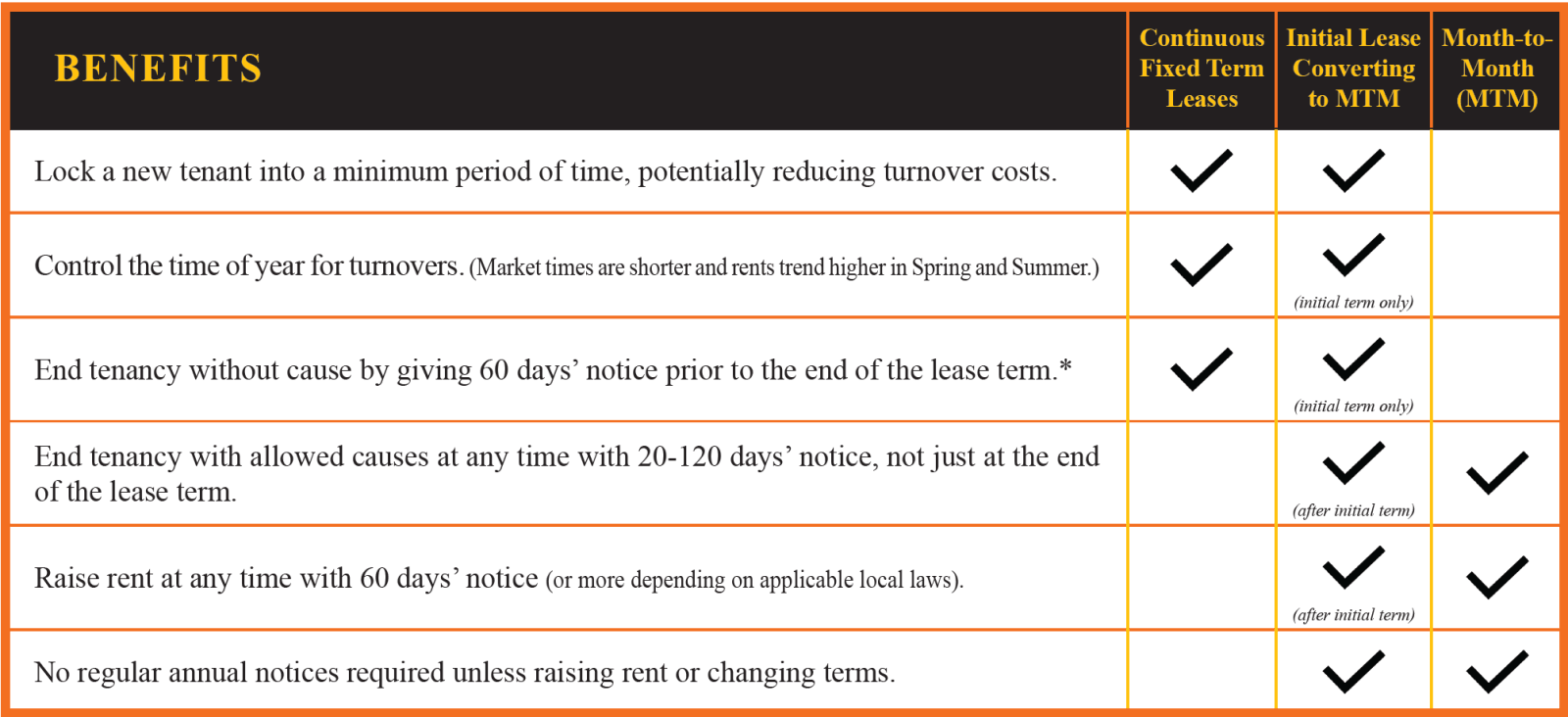
*Must offer lease renewal in Burien, Federal Way, Seattle and unincorporated areas of King County unless there is a “just cause” to end tenancy.
Now, if you have decided to maintain fixed terms, here are some best practices followed by many of our members.
Set Expectations
When signing a lease with a new tenant, explain that the lease is a fixed term ending on the day listed in the agreement. A few months prior to that date, you will reach out to inspect the property and discuss any offer for renewal. Avoid making any upfront predictions on whether you will be likely to offer a renewal.
Check Your Local Laws for Rent Increase Notice Requirements
In addition to longer notice periods up to 180 days, several cities also require disclosures and special notice service requirements. Make sure to check the RHAWA Rent Increase Notice Form and follow local instructions detailed in the notice packet. If the rent increase notice period is 180 days, you may not want to offer a lease renewal that far in advance, just in case something changes. In this case, many housing providers are serving the notices separately.
Inspect and Determine If You Want to Renew
Allow plenty of time for your notice period requirements before the end of the term, schedule a routine inspection, and see how the property has been cared for so far. This step is especially important in the initial term, but it is a good idea to do this every year. Take the opportunity to meet with the tenant and ensure all is well. Is there any maintenance needed? Are there any unreported new occupants (humans or pets)?
Determine Rent
Complete a market analysis by identifying comparable rental properties in your immediate area. Identify all periodic and annual costs associated with the property. Check the statewide rent cap for the year in which the increase will take effect. Take into account any other increases that have impacted the tenant’s rent within the twelve months preceding when the new rent amount will take effect. Go to www.commerce.wa.gov/housing-policy/hb1217-landlord-resource-center/ to check the cap published in June each year for the following calendar year. You should be able to see the 2027 cap now.
Discuss Plans with Your Tenant
Prior to officially sending the notices, many housing providers like to first have a conversation with their tenants about plans for the following year. Let them know what the new rent will be. Do they want to stay? Are there any other terms they’d like to change? Let them know you will follow up with legally required notices. This way, when you send the actual notices, it’s just a formality, and they are not surprised.
Rent Increases No Longer Built-In with Renewals
Two separate notices are now required for the renewal process and the rent increase process.
- In order to enforce your choice to maintain fixed-term leases, you must serve your renewal offers along with an End of Term Notice more than 60 days before the end of the current term. This notice says that the tenant must sign the attached renewal offer (or full lease) within 30 days or move out at the end of this term. Without this notice, the tenant could legally opt to continue their tenancy under month-to-month terms.
- If you want your lease renewal to come with a rent increase at the beginning of the new term, you must serve a Rent and Fee Increase Notice to Tenant more than 90 days before the increase is to go into effect. In several cities, often based on the percentage of increase, longer notice periods are required.
Best practice in most cases is to serve these two notices together using the longer notice period. If the opportunity is missed, many providers have been delaying the rent increase so it takes effect mid-term instead of the beginning of the term.
MARK YOUR CALENDAR
Whenever a new tenant moves in, mark your calendar with their renewal schedule to include when to inspect, discuss renewal, when you must give rent increase notice, and when to serve an End of Term Notice with Renewal.Seattle has a unique requirement that the renewal notice must be served between 90 and 60 days before the end of the term. For cities where the notice is variable based on the increase percent, assume the longest timeline for planning purposes. The following is an example for someone with three properties in Seattle, Auburn, and Bellevue, which follows state law.

Note that the notice dates in the example are set a full two weeks before the legal minimum required notice period. The law requires an extra five days for mailing notices, and the extra time is just a good idea. Better safe than sorry! For the Bellevue example, this person might want to serve the Rent Increase and Renewal together to save time and money. However, for the Seattle example, they may not be ready to offer a renewal more than six months before the end of the term, so they might want to wait and serve the renewal notice later.After determining your planned dates, make sure to put them on your calendar and execute your plans on time.
If the tenant does not sign your offered lease within 30 days after you served the notice, according to the language in the RHAWA notice and supported by law under RCW 59.18.650, they must vacate by the end of the current term. Make sure you are clearly communicating this deadline to your tenant and that they understand they need to sign the new lease or be prepared to move out.
If You Decide Not to Renew
If you decide not to renew a tenancy, use the same deadline you’ve noted for the renewal notice, but instead serve the End of Term Notice with Nonrenewal. Make sure you communicate clearly with your tenant. Follow up with a reminder that they must vacate by the end of the term.
What If I Don’t Give Proper Notice?
Unfortunately, the penalties could be massive. For example, if your tenant ends up in financial straits five years from now and you face them in eviction court, an improperly served rental notice now could result in you owing them years of back rent, plus up to $7,500 in fines for each improperly served notice.
Most Important Best Practices?
Communicate clearly and try your best to maintain a positive working relationship with your tenants. RHAWA members can find this and other self-help articles in the Support Center. You can also get more education on leasing and all other aspects of rental operations on demand. Just go to Member Access and select Free Member Education.
Term Lease Renewal
This article was written and edited by RHAWA representatives and is intended for the use of RHAWA members only. Copyrighted members-only materials may not be further disseminated.
Formal legal advice and review are recommended prior to the selection and use of this information. RHAWA does not represent your selection or execution of this information as appropriate for your specific circumstance. The material contained and represented herein, although obtained from reliable sources, is not considered legal advice or to be used as a substitution for legal counsel.