MORAL HAZARD Rent Caps. Soft Markets. Record Evictions.
The most dangerous policy is one that works exactly as advertised, right up until it doesn’t. The damage from simple solutions applied to complex systems rarely arrives at the front door of the people who built them. It shows up in court filings and maintenance logs and midnight phone calls to rental housing providers, years after the ribbon cutting and press release.
Which brings me to one of the finest critiques of this phenomenon ever produced. Not by an economist. Not by a think tank. By The Simpsons.
In the classic episode “Trash of the Titans,” Homer Simpson runs for Sanitation Commissioner on a single, unforgettable slogan: “Can’t someone else do it?” Running on a platform of asking folks why exactly they are taking out their own trash to the curb, or even putting the garbage in the bags at all, Homer wins in a landslide. Springfield quickly boasts the highest level of sanitation services in the nation. Until the town spends an entire year’s budget in a single month, because the unforeseen consequences of meddling in the complex economics of sanitation turn out to be ruinous. The episode won the Primetime Emmy for Outstanding Animated Program, and it remains required viewing for anyone interested in simple political slogans being enacted into policy.
“Can’t someone else do it?” is funny when Homer says it about garbage. It stops being funny when it becomes the implicit logic of a rent cap, the assumption that operating costs, maintenance, insurance, and taxes can simply be absorbed by someone else down the chain without consequence. It takes on an entirely different meaning when the phrase is tied to contract law and the question of whose responsibility it is to pay rent, and why.
A Renter’s Market, With Record Evictions
The national rental market is in its softest condition in nearly a decade. Vacancy is at 7.3 percent, a record high. Median asking rents have declined year-over-year for twenty-nine consecutive months. In Washington State, rents are essentially flat, up barely 1.7 percent year-over-year statewide, with Seattle averaging less than one percent growth. The rent cap under HB 1217 is set at 9.683 percent for 2026. Rents aren’t even approaching the cap. By any objective measure, this is a renter’s market. Tenants should be getting better deals, more concessions, and greater leverage.
So why are evictions at an all-time high?
On February 2, 2026, The Seattle Times published an article titled, “King County, WA eviction levels hit an all-time high, again.” Citing data from the Office of Civil Legal Aid, the report noted that around 9 in 10 cases in 2025 were due to nonpayment of rent statewide. The Times posits a simple explanation: rents are simply too high for tenants to afford.
This is where we must respectfully, but firmly, disagree.
Nonpayment doesn’t inherently mean can’t pay. What it truly means is didn’t pay. To understand the difference, we have to look at who is actually filing these evictions.
If the root cause was strictly free-market landlords gouging tenants, then subsidized affordable housing providers should have virtually empty eviction dockets.
The data tells a completely different story.
The Affordable Housing Anomaly
The Spokane court conducts unlawful detainer hearings every other week. Here is the percentage of cases filed by affordable housing providers over a recent four-week stretch:
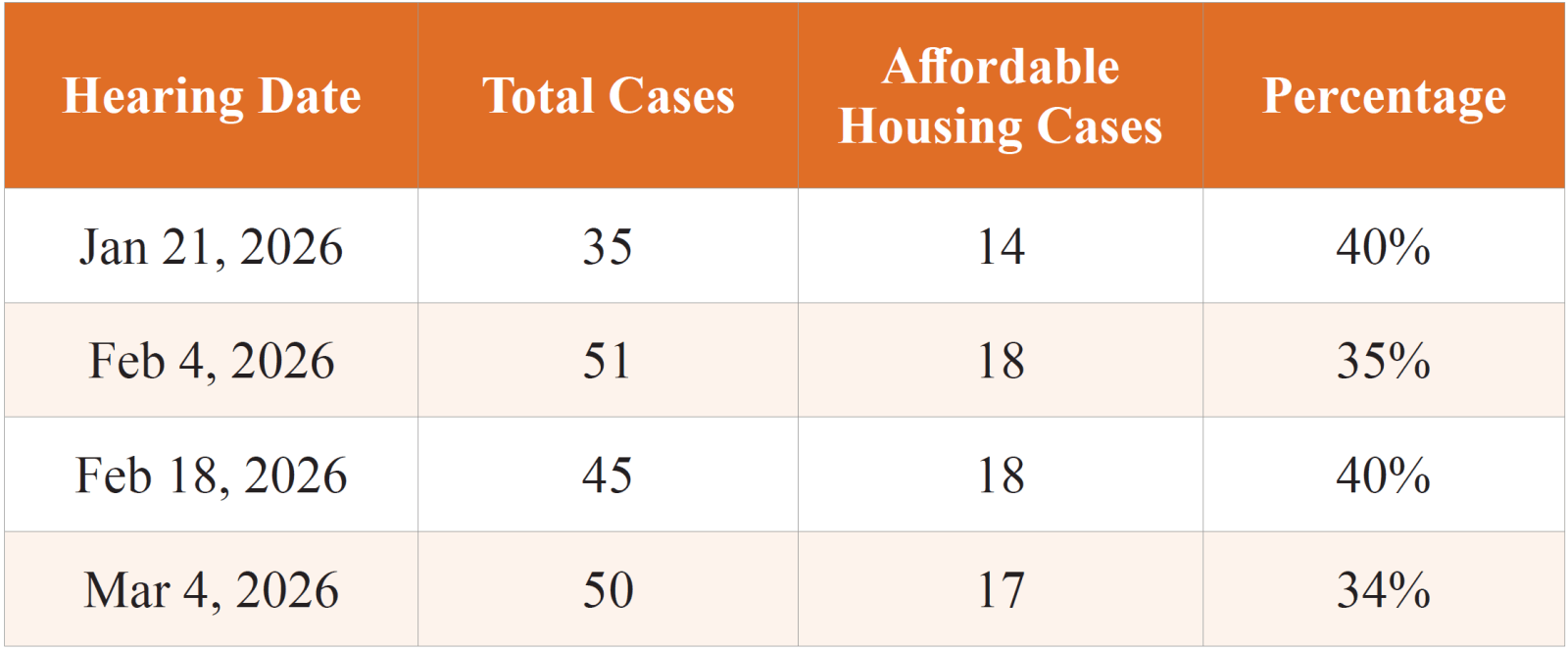
37 percent of unlawful detainer cases in Spokane are originating from affordable housing providers. These are organizations where tenants pay roughly 30 percent of their income toward rent, and a nonprofit or subsidy covers the rest. A tenant earning $500 a month might owe $150 in rent. And yet, over a third of evictions are coming from these units.
Consider what nonpayment looks like at that scale. A $150-per-month tenant who stops paying doesn’t cost the provider $150 once. The loss compounds month after month while operating costs continue. Under RCW 59.18.290, the provider can’t recover attorney fees until the tenant owes at least two months of rent and at least $1,200. At $150 a month, that’s eight months of consecutive nonpayment before the provider can even begin to recoup legal costs. By that point, the arrears are insurmountable and likely unrecoverable.
The law actively penalizes early intervention. It incentivizes delayed enforcement. And when providers finally do file, the amounts are catastrophic. The eviction paradox: more filings, later in the process, for larger, more devastating sums.
Softening rents. Record vacancy. Larger concessions. Evictions are at an all-time high, 90 percent for nonpayment. Even the institutions subsidized to charge tenants less are drowning in it.
Do we have an eviction problem, or do we have a nonpayment of rent problem?
The Cobra Effect and the Magic Piece of Paper
During the British Raj, the colonial government in Delhi offered a bounty for every dead cobra brought to the authorities. It worked until enterprising residents started breeding cobras for the bounty. When the government canceled the program, the breeders released their now-worthless snakes into the wild. Delhi ended up with more cobras than it started with.
The Cobra Effect, where policies produce the opposite of their intended outcome, is alive and well in Washington’s rental housing market.
On February 2, 2026, the Spokane City Council voted 5–2 to pass the “Pathways to Eviction Diversion” ordinance: a mandatory 30-day diversion process before any nonpayment eviction, with required written notices at leasing and at every pay-or-vacate. No rental assistance was allotted. State law requires nonpayment evictions to proceed within 60 days of a pay-or-vacate notice. Thirty days of mandatory diversion inside a 60-day filing window. Do the math.
The primary defense against eviction has become procedural. Zooming out from our rental lens, the required notice is just a piece of paper. In the current legal climate, it is a magic piece of paper. The magic works like this: if your property manager makes a slight procedural error in a process that changes constantly at the local and state levels, the lease enforcement action fails on technical grounds, regardless of whether rent was paid.
Because of Right to Counsel programs, tenants are provided free attorneys from organizations like the Housing Justice Project. The tenant isn’t betting that a judge will enforce the lease. The tenant is betting that their free lawyer will find that the provider didn’t provide the magic piece of paper. Whether the motivation is a holdover expectation that rental assistance will materialize, or simply the rational recognition that a paperwork defect offers a nonzero chance of staying housed without paying, the incentive structure points in one direction.
You aren’t fixing the cobra problem. You’re breeding more of them.
A Word About Moral Hazard
Moral hazard is what happens when the party making a decision doesn’t bear the cost of being wrong. In Washington, it’s operating on two levels. Neither involves outright villainy. Both involve incentive structures that have shifted the calculus of risk in ways that hurt everyone.
Tenant-Side Moral Hazard
This is not a story about bad tenants. It is a story about what happens when the consequence structure changes and incentives shift.
When eviction timelines in King County stretch to 40 weeks, as they have, the rational response from a provider is to begin proceedings earlier and with less tolerance for partial payment. Add King County’s winter and school-year eviction bans, and a straightforward nonpayment case can stretch past six months. When the process of enforcing a lease becomes so protracted and expensive that providers cannot afford to extend grace, the rational response is to move faster, not slower. The tenant who might have been given an extra month to catch up in 2018 is now getting a pay-or-vacate notice on day fifteen. When the consequence structure changes, behavior changes. That’s true of everyone, including landlords and legislators.
The numbers confirm the mechanism. Washington recorded 23,965 eviction filings in 2025, a new all-time high. The King County Superior Court sent 6,635 orders to the sheriff’s office in 2025, a 51 percent increase over 2024 and a 217 percent increase over 2023. The office had to add staff specifically dedicated to evictions to manage the volume.
Legislative Moral Hazard
When a legislator votes for rent control, an eviction moratorium, or a mandatory diversion program, the policy instrument and its downstream outcomes are separated by enough complexity that accountability diffuses. They can act without bearing the risk. When evictions rise after a rent cap passes, the legislator is not the one who gets the 2 a.m. call about a burst pipe they can no longer afford to fix. A burst pipe that must be fixed, even if the tenant hasn’t paid rent in several months. The provider is the one who gets that call. The complexity of the causal chain between policy and outcome is not a bug. For those making the policy, it functions as a feature.
In “Trash of the Titans,” spoilers, everything eventually comes to a head. Springfield is literally buried under the accumulated consequences of promises that were never economically sustainable. The town has to pick up and relocate.
The mountain of garbage is the perfect image for regulatory accumulation: each individual ordinance looks reasonable in isolation. The pile is what kills you.
Washington’s rental housing providers are staring at a growing pile. HB 1217. Right to Counsel. Winter eviction moratoriums. School-year moratoriums. The Spokane diversion mandate Each one was passed with good intentions. Each one added time, cost, and procedural exposure. And none of them came with a mechanism for measuring whether the cumulative effect was actually reducing displacement, or accelerating it.
“Can’t Someone Else Do It?”
Pass-through costs are not a theory. They are a law of commerce as immutable as gravity. Insurance premiums, property taxes, maintenance, legal compliance, and capital reserves. When policy constrains revenue while costs rise unchecked, something has to give. What gives is investment. What gives is maintenance. What gives is the willingness of private capital to participate in the housing market at all.
There are inherent difficulties with supply and demand when you introduce economic and legal distortions. Rents are softening. There is more vacancy. So why are evictions increasing? Why are private market and affordable housing providers dealing with the same surge in nonpayment? And why is the policy response to delay the eviction rather than address the root cause?
The question is whether we have an eviction problem or a nonpayment problem. And whether pretending the answer is “someone else” is a governing philosophy or a Simpsons plot.