
New State Law: Portable Cooling Devices for Renters
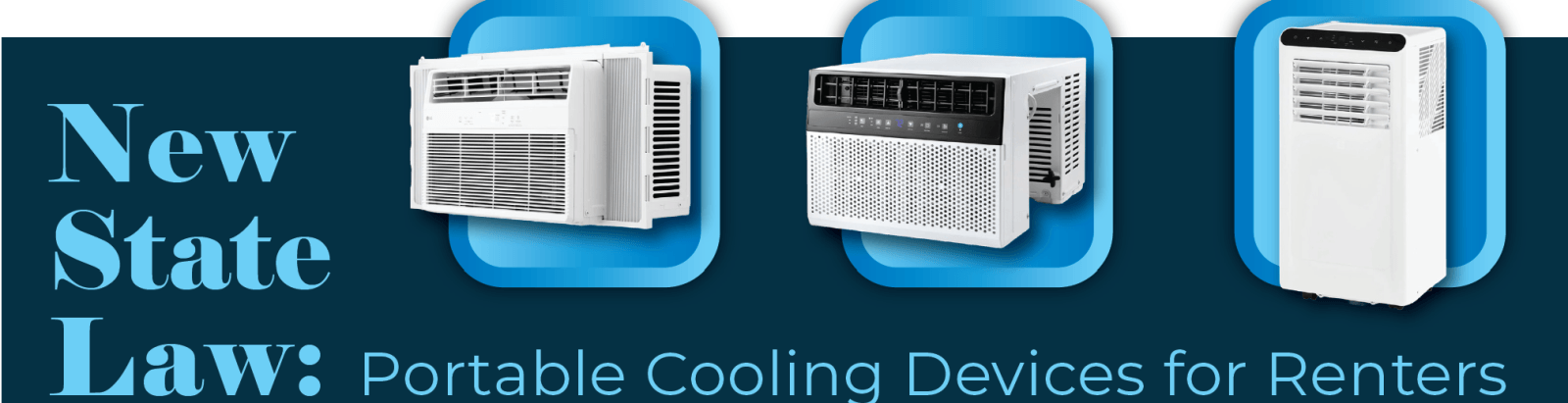
ESSB 6200 (Chapter 184, Laws of 2026) — Effective June 11, 2026. Beginning June 11, 2026, Washington landlords generally cannot prohibit tenants from installing portable cooling devices of their choosing. The law covers both residential tenants under the Residential Landlord-Tenant Act (RCW 59.18) and mobile home park tenants under the MHLTA (RCW 59.20). Governor Ferguson signed the bill on March 24, 2026.
The law defines “portable cooling device” as an air conditioner or portable heat pump, including window-mounted and floor-standing units.
The bill creates three device categories with different rules for each:
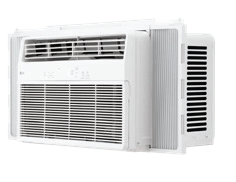 Window-Mounted Devices: Units installed to sit in a window opening. Subject to the most restrictions, notice requirements, and inspection provisions.
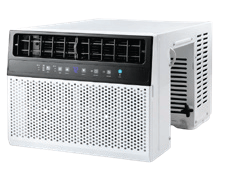 Saddle-Mounted Devices: Units (including U-shaped models) that hang over the windowsill with interior and exterior components, leaving the window view partially unobstructed. These are explicitly excluded from the “window-mounted” category and its additional restrictions.
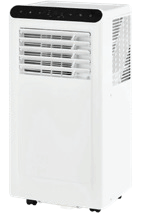 Floor-Mounted Devices: Freestanding units connected to a window for venting. Also excluded from the window-mounted restrictions.
Note: The law covers air conditioners and heat pumps. Evaporative coolers (swamp coolers) are not specifically addressed in the statute and may not be covered.
WHAT HOUSING PROVIDERS NEED TO KNOW
Permitted Restrictions; All Device Types
A landlord may prohibit or restrict any portable cooling device if the dwelling already has a permanently installed and fully operational heat pump, or if installation would:
- Violate state or local building codes, state law, or federal law.
- Violate the device manufacturer’s written safety guidelines.
- Cause unreasonable damage to the premises or render the premises uninhabitable.
- Require electrical supply that cannot be accommodated by the existing power service to the building, unit, or circuit.
Additional Restrictions; Window-Mounted Devices Only
Landlords may also restrict window-mounted devices specifically if:
- The window is a necessary egress and the device would interfere with its use.
- The device would prevent the tenant from locking a window accessible from outside.
- The device requires excessive brackets or hardware that would damage or void the window/frame warranty, puncture the exterior wall, or cause significant damage.
- The device cannot be secured against falling out of the window.
- The landlord’s insurance policy expressly restricts or prohibits window-mounted cooling devices, and the landlord has provided written evidence of the restriction to the tenant.
Landlords may also require that any portable cooling device be adequately drained to prevent damage.
FEES, COSTS, AND DEPOSITS
- Landlords cannot charge a fee for the use, inspection, or installation of a tenant’s portable cooling device.
- Landlords may charge rent for a cooling device rented by the tenant from the landlord.
- Landlords may charge for any damages caused by the tenant’s device.
- Landlords may retain security deposit amounts for lawful purposes under RCW 59.18.280.
NOTICE, INSPECTION, AND LEASE REQUIREMENTS
- Tenant notice: Tenants must provide at least two days’ notice before installing a window-mounted device. (No notice requirement for floor or saddle-mounted units.)
- Inspection and servicing: Landlords may require that window-mounted devices be inspected or serviced after installation.
- Lease disclosure: If a landlord restricts or prohibits window-mounted devices, the landlord must notify tenants in their leases of their rights, responsibilities, and any restrictions.
LIABILITY
- Landlord immunity: Landlords are immune from liability for damages, injury, or death caused by a tenant-installed portable cooling device.
- Electrical interruptions: Landlords are not responsible for interruptions in electrical service caused by a portable cooling device, including when the electrical supply cannot accommodate the device.
Nothing in the law limits landlord obligations to provide reasonable accommodations under existing state and federal law.
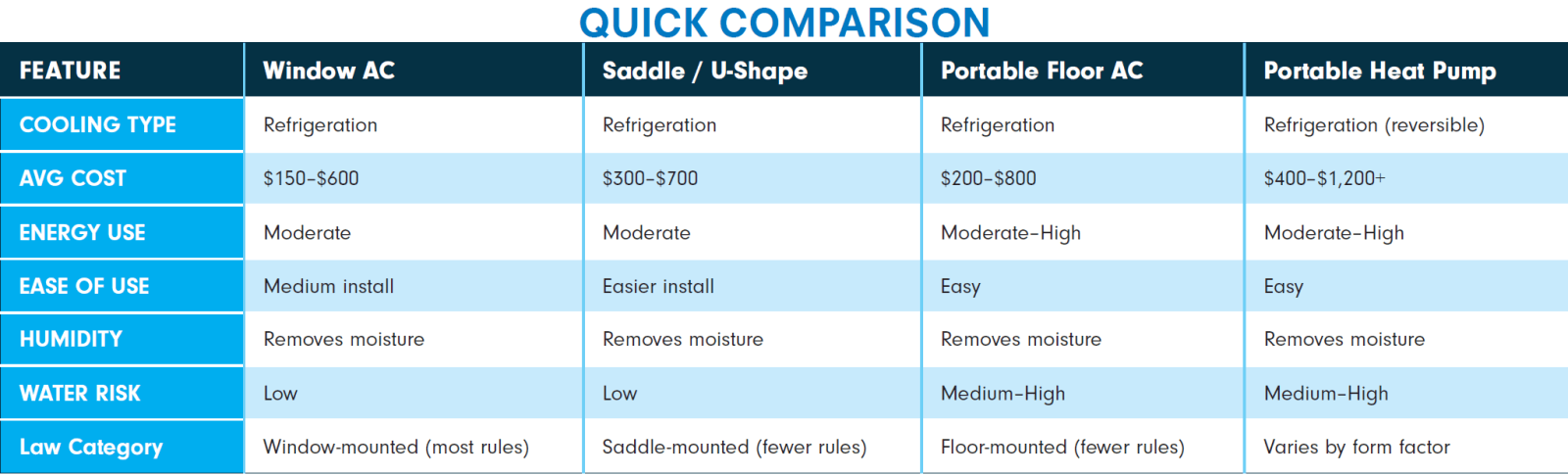
UNDERSTANDING THE OPTIONS: A GUIDE TO PORTABLE COOLING DEVICES
While you wouldn’t want to unreasonably restrict your residents’ choices, it’s helpful to understand the pros and cons of these options so you can provide useful information based on your property’s features and limitations.
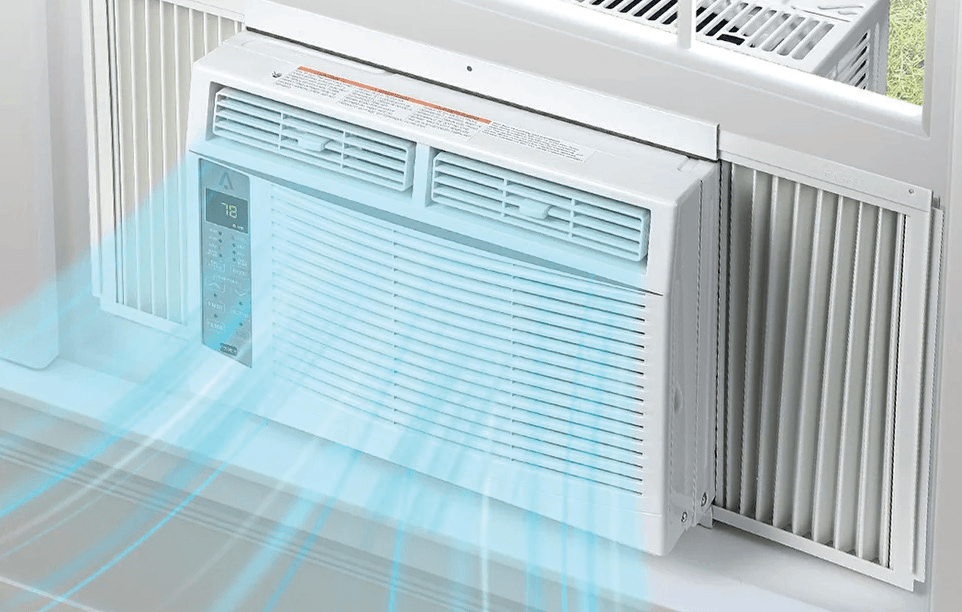
Window-Mounted Air Conditioners
- How they work: Self-contained AC units installed in a window opening. Use a compressor-based refrigeration cycle to cool and dehumidify air.
- Average cost: $150–$600 for the unit; installation is usually DIY.
- Energy use: Moderate. Typically 500–1,500 watts depending on size. Generally more efficient than portable floor units.
- Ease of use: Requires lifting and securing in the window. Simple to operate once installed.
Potential damage/risks:
- Water: Condensation drains outside, but improper tilt can cause indoor leakage.
- Structural: Poor installation can damage window frames.
- Electrical: Moderate risk if overloaded circuits or older wiring.
- Injury: Poor installation could cause the unit to fall out of a window.
Note: Under the new law, this is the most regulated category. Notice, inspection, insurance, and egress provisions all apply specifically to window-mounted devices.
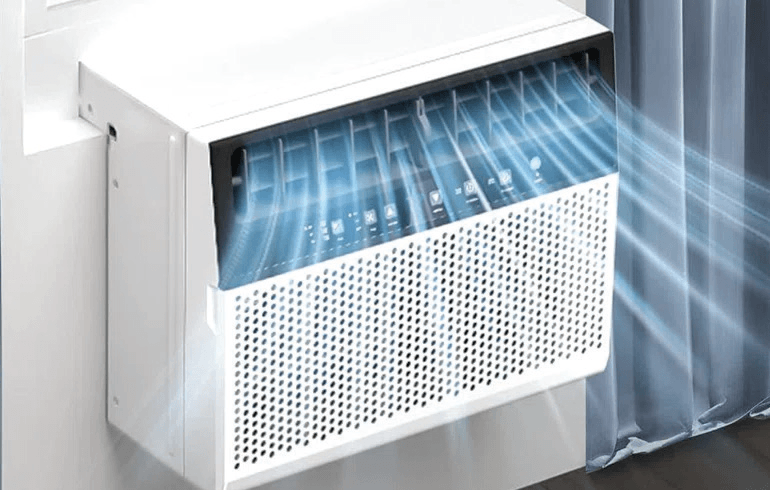
Saddle-Mounted / U-Shaped Air Conditioners
- How they work: These units hang over the windowsill with components on both sides of the window, rather than sitting fully in the opening. The window view is not fully obstructed and the unit will not fall when the window is opened.
- Average cost: $300–$700 for the unit.
- Energy use: Moderate. Comparable to traditional window units.
- Ease of use: Easier to install than traditional window AC; no risk of the unit falling out.
Potential damage/risks:
- Water: Similar condensation considerations as window units.
- Structural: Lower risk to window frames than traditional window-mounted units.
- Note: The law explicitly distinguishes these from “window-mounted” devices. The additional restrictions on window-mounted units (egress, insurance, two-day notice, inspection) do not apply to saddle-mounted devices.
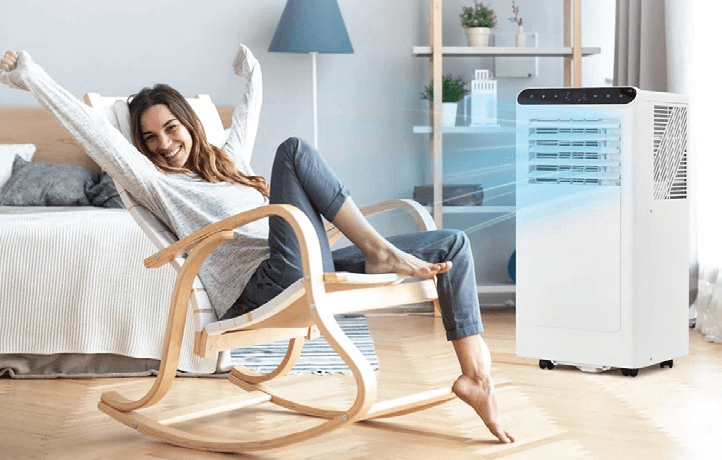
Portable Floor AC Units
- How they work: Freestanding AC units with an exhaust hose vented through a window. Use the same refrigeration system as traditional AC.
- Average cost: $200–$800 for the unit; window vent kit typically included.
- Energy use: Moderate to high. Often less efficient than window units due to air leakage and heat re-entry. Can increase energy bills.
- Ease of use: Easy setup with no lifting into a window. Requires vent hose setup and periodic draining of condensate on some models.
Potential damage/risks:
- Water: Higher risk—condensate tanks can overflow or leak if not emptied.
- Mold: Standing water if not maintained.
- Air leakage: Poor window sealing reduces efficiency.
- Note: Floor units connected to a window for venting are not classified as “window-mounted” under the law. The additional window-mounted restrictions do not apply.
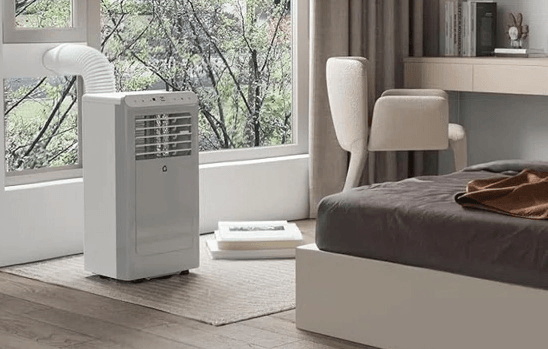
Portable Heat Pumps (Cooling Mode)
- How they work: Essentially a portable air conditioner with reverse-cycle capability (can heat and cool). Uses refrigeration like AC but more versatile.
- Average cost: $400–$1,200+.
- Energy use: Moderate to high. Similar to portable AC in cooling mode. Often slightly more efficient, especially dual-hose models.
- Ease of use: Same setup as portable AC. Added complexity from dual heating/cooling modes.
Potential damage/risks:
- Water: Same condensate risks as portable AC.
- Electrical: Slightly higher draw due to more complex components.
A Note on Evaporative Coolers (Swamp Coolers)
Evaporative coolers use water evaporation rather than a compressor to cool air. They are energy-efficient (using roughly 15–35% of the electricity of AC systems) and inexpensive ($150–$600), but they add moisture to the air and work best in dry climates. In Western Washington’s moderately humid summers, effectiveness is reduced. Eastern Washington’s drier climate is more suitable.
Important: Evaporative coolers are not air conditioners or heat pumps, and the new law’s definition of “portable cooling device” may not include them. Housing providers should be aware that the legal protections and restrictions in ESSB 6200 may not apply to these devices. Consult legal counsel if questions arise about whether a specific device is covered.
Potential damage/risks for housing providers:
- Water: Moderate risk from spills, leaks, overfilling.
- Humidity damage: Can increase indoor moisture, risking damage to wood, paint, or mold growth.
BOTTOM LINE
- Best overall value: Window AC (efficient, reliable, low water risk).
- Fewest legal restrictions: Saddle-mounted/U-shaped and floor units avoid the window-mounted provisions.
- Best with no window access: Portable AC or portable heat pump.
- Highest risk of water issues: Portable AC and heat pumps (condensate handling).
Formal legal advice and review is recommended prior to selection and use of this information. RHAWA does not represent your selection or execution of this information as appropriate for your specific circumstance. The material contained and represented herein, although obtained from reliable sources, is not considered legal advice or to be used as a substitution for legal counsel.